Waterless Cleaning of Solar Panels
Solar energy is one of the fastest-growing renewable energy sources globally, with photovoltaic (PV) systems playing a pivotal role in harnessing sunlight for electricity. As the demand for clean energy continues to rise, optimizing the performance of solar panels becomes more critical. One of the key challenges solar panels face is the accumulation of dust and pollutants, which can significantly decrease their efficiency. Traditional cleaning methods often rely on water and manual labor, but advancements in waterless solar panel cleaning technologies have emerged as a sustainable alternative, offering improved efficiency with minimal environmental impact.
What is Waterless Solar Panel Cleaning Technology?
Waterless solar panel cleaning is a novel approach that eliminates the need for water and physical contact with the panel’s surface to remove dust, dirt, and other contaminants. These methods are gaining attention for their environmental friendliness and efficiency. Traditional water-based cleaning can waste large amounts of water, which is especially problematic in arid regions. Moreover, physical cleaning techniques such as scrubbing can cause damage to the panels, reducing their lifespan. Waterless cleaning methods are designed to address these issues while maintaining or even improving cleaning effectiveness.
How Do Waterless Cleaning Technologies Work?
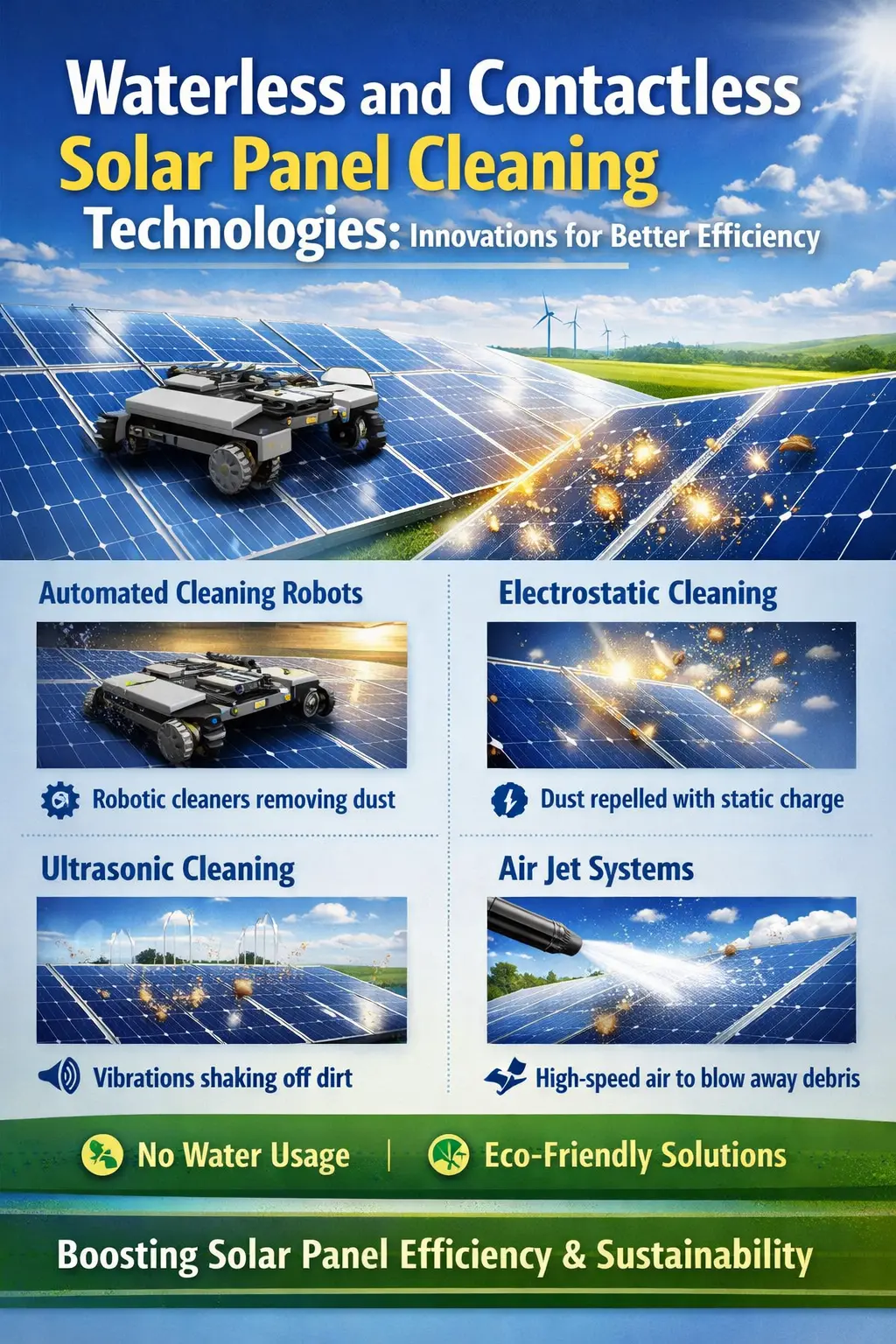
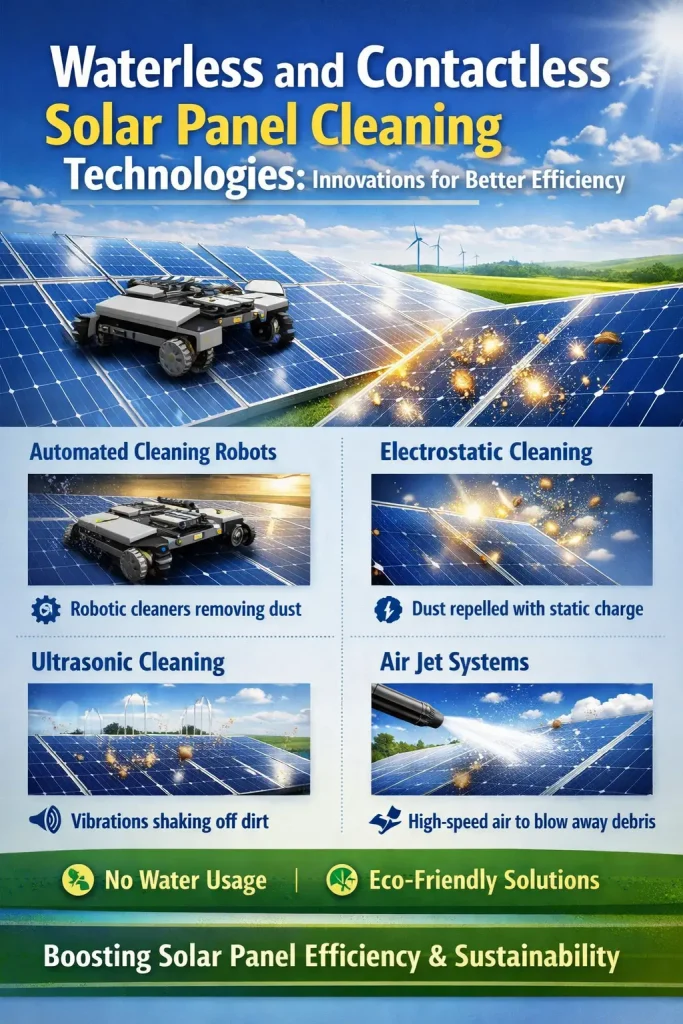
Waterless cleaning technologies for solar panels primarily rely on advanced mechanisms such as electrostatic cleaning, superhydrophobic coatings, and aerodynamic cleaning. These systems use non-contact methods to effectively remove dust without the need for water or scrubbing. Below are some of the leading techniques used in waterless solar panel cleaning:
1. Electrostatic Dust Removal Technology
Electrostatic cleaning uses an electric field to remove dust particles from the surface of the panels. By charging the dust particles and using oppositely charged surfaces, the technology attracts and lifts the dust away from the panels. This method is highly effective, especially for fine particles that are difficult to remove using traditional methods.
2. Superhydrophobic Coatings for Self-Cleaning Panels
Superhydrophobic coatings are applied to the glass surface of solar panels, creating a highly water-repellent layer. This coating prevents dust from sticking to the surface, allowing rain or wind to naturally remove particles. The coating also improves the durability of the panel by protecting it from harsh weather conditions and pollutants.
3. Aerodynamic Dust Removal
Aerodynamic cleaning utilizes airflow to blow away dust particles from the surface of solar panels. High-velocity air streams are directed across the panel to dislodge dust without touching the surface. This technology is particularly effective in dry and arid climates where dust accumulation is rapid.
Advantages of Waterless Solar Panel Cleaning Technologies
The introduction of waterless cleaning systems has brought significant advantages to solar panel maintenance, especially in areas where water resources are scarce. The benefits include:
- Water Conservation: Traditional cleaning methods consume large amounts of water, which can be a scarce resource in certain regions. Waterless technologies eliminate this need, making them more sustainable, especially in dry climates.
- Reduced Operational Costs: Since waterless cleaning does not require water or extensive manpower, it reduces both operational and maintenance costs, especially for large solar farms.
- Prevention of Surface Damage: Unlike traditional cleaning methods, which involve physical scrubbing, waterless technologies do not risk scratching or damaging the surface of solar panels, ensuring better long-term performance.
- Improved Efficiency: By removing dust and pollutants efficiently without using water, these cleaning methods ensure that solar panels operate at their maximum efficiency, improving energy output and reducing performance losses.
Comparing Waterless Cleaning Technologies: Which One Works Best?
In evaluating waterless solar panel cleaning technologies, it is important to consider factors like cleaning efficiency, durability, and maintenance requirements. Here’s a comparison of the most common methods:
| Technology | Efficiency | Durability | Maintenance | Cost | Water Usage |
|---|---|---|---|---|---|
| Electrostatic Cleaning | High | Medium | Low | Medium | None |
| Superhydrophobic Coatings | Medium | High | Low | High | None |
| Aerodynamic Cleaning | Medium | Medium | Medium | Low | None |
- Electrostatic cleaning is highly efficient and easy to maintain but requires an initial investment in the setup.
- Superhydrophobic coatings are durable and offer excellent protection against dust, though the cost of applying these coatings may be high.
- Aerodynamic cleaning is an effective low-cost option that is ideal for regular dust removal without requiring any surface contact.
Real-World Applications of Waterless Solar Panel Cleaning
Waterless cleaning technologies have been successfully implemented in various parts of the world. For example, large-scale solar farms in the Middle East, where water scarcity is a major concern, have adopted electrostatic dust removal systems. Similarly, regions with high dust accumulation, such as parts of India and Pakistan, have begun using superhydrophobic coatings to reduce the cleaning frequency and improve solar panel performance.
While these technologies are still in the research and development phase for large-scale deployment, the results from field trials have shown promising improvements in solar efficiency and cost savings. The next step for these technologies is scaling up from laboratory testing to real-world applications, where they can be tested under varying weather conditions and dust levels.
Future Directions for Waterless Solar Panel Cleaning Technologies
As solar energy adoption continues to grow globally, especially in countries like Pakistan, the demand for efficient and cost-effective cleaning methods for solar panels will rise. Future research should focus on:
- Field Testing and Large-Scale Deployments: There is a need for more extensive field trials to assess the real-world effectiveness of waterless cleaning systems. Research should focus on long-term performance in different environmental conditions.
- Hybrid Systems: Combining multiple cleaning technologies, such as electrostatic cleaning with superhydrophobic coatings, could further improve efficiency and minimize the need for maintenance.
- Cost Reduction: One of the primary barriers to the widespread adoption of these technologies is their initial cost. Ongoing research should focus on reducing the cost of materials and technologies to make them more accessible to large-scale solar installations.
- Adaptation for Specific Climates: Different regions have varying levels of dust accumulation and environmental conditions. Future research should develop tailored solutions that cater to the unique needs of specific geographic areas, like Pakistan, where dust storms can affect solar panel efficiency.
Conclusion
Waterless and contactless cleaning technologies represent a revolutionary shift in solar panel maintenance, offering a sustainable and efficient solution for cleaning solar modules without the need for water. Technologies like electrostatic cleaning, superhydrophobic coatings, and aerodynamic cleaning are already showing great potential in improving solar panel efficiency, reducing operational costs, and conserving water. As research progresses and these technologies are deployed on a larger scale, the solar industry will benefit from cleaner, more efficient panels, contributing to the continued growth of renewable energy worldwide.
For more information on solar panel cleaning technologies and their impact on performance, visit The Solar Panel Price in Pakistan.


